
Recently, a friend who makes ready-made fabrics complained to the editor that in the past two years, he has felt more than once that he does not look like a A cloth seller is like a stock speculator. Watching the rise and fall of gray cloth prices every day is like looking at the stock market, and he is frightened.
I have been selling cloth for more than ten years and have never seen such a market price
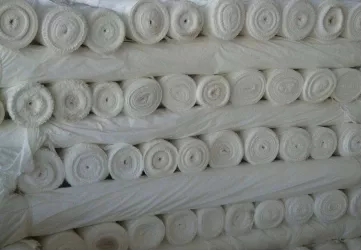
Finished goods spot is a traditional business in the textile market, usually playing the role of a middleman. This friend of the editor also started making it very early, and it has been more than ten years now. He only makes a few conventional varieties, and has hundreds of thousands of meters of each variety of more than a dozen conventional products. The total inventory is almost 5 million meters.
According to what he said, although 5 million meters of cloth seems to be a lot now, for those who make finished products, who doesn’t have a few million meters in stock? It is normal for some enterprises of a relatively large scale to stock tens of millions of meters. Some of them have their own weaving factories, some do not, but even if they have their own weaving factories, the products they produce are only a small part of what they sell, and they usually place orders with weaving companies seasonally according to market rules. At a specific time, old customers will get goods from them.
Over time, they relied on their advantages of scale and the rise and fall of fabric prices in the off-peak seasons to make a slight profit. However, because it is a conventional product, the profit margin is not high, and it is purely a volume-based job.
However, things seem to have changed since last year. It seems that the market has changed too fast and has become a bit difficult to understand.
One side is heaven, the other side is hell, two heavens of ice and fire The textile market
From last year to this year, the textile market seems to have experienced “ice and fire”.
In the first half of last year, due to the rectification of water-jet looms in Jiangsu and Zhejiang regions, new production capacity did not keep up. The production capacity of conventional products was greatly compressed, resulting in a decline in the market. The supply of conventional “bad fabrics” such as pongee and polyester taffeta exceeds demand, and there is even a phenomenon of “hard to find a piece of fabric”. The price of gray fabrics has risen sharply under the influence of supply and demand.
Since July last year, as the prices of raw materials PX, PTA, and polyester filament have continued to rise, the price of gray fabrics has risen sharply again, driven by raw materials.
If you use one sentence to describe last year’s cloth prices, it is that there is no highest, only higher.
But the situation this year seems to be the opposite of last year. Come over.
Beginning in mid-April, the peak season in the first half of the year arrived half a month earlier than before. Weaving manufacturers began to accumulate inventory in advance, because inventory pressure led to tight capital chains and the phenomenon of selling goods. As is often the case, the supply of conventional products exceeds demand, and the price of gray fabrics is greatly suppressed. When textile people generally believed that the price of gray fabrics had hit rock bottom and could no longer be lowered, they suffered a heavy blow from reality.
Starting in July, the prices of PTA and polyester filament have plummeted, causing the prices of conventional products to fall further. Now, due to the arrival of a new round of PTA equipment production, the market is further bearish on polyester raw materials. Under such circumstances, the price of gray fabrics does not know where to fall.
Textile people really can’t bear the ups and downs of the market
The consequences of such a sharp rise and fall on the textile market can be said to be destructive.
Take the editor’s friend who makes ready-made finished goods as an example. Last year, business was so good that the weaving factories he usually cooperated with didn’t have time to complete orders. They had to queue up to place orders. It will be scheduled for a few months; but this year, the price of cloth has dropped by nearly one-third from the beginning of the year to now, and the value of 5 million meters of cloth in stock has dropped from nearly 15 million to about 10 million. Not only has the price fallen, but the trading volume has also shrunk. I have made a lot of money. It was originally a small profit but quick turnover business, but now it is like stock trading., it seems that making money and losing money does not depend on the sales volume of cloth, but on the fluctuation of raw materials and cloth prices.
This is also not good news for weaving companies. Finished goods merchants generally play a buffering role in the market. They will place orders for weaving companies in advance during the off-season and transfer part of the weaving company’s inventory to themselves. This is equivalent to helping weaving companies realize part of the inventory in advance and relieve some of their worries. financial pressure.
But once we encounter the situation this year, the price of cloth plummets, and the cloth in stock becomes less valuable day by day. Under such circumstances, the willingness of spot merchants to place orders will naturally become lower, and the number of orders in the hands of weaving companies will visibly decrease. Inventory will inevitably be in their own hands, and the capital chain will become increasingly difficult.
Today’s textile workers earn money from selling fabrics and are obsessed with stock trading. They keep an eye on the prices of raw materials and cloths every day. When the prices of raw materials skyrocketed last year, they hoped that they would not rise again. This year they will continue to rise. I hope it won’t fall again. Who can withstand such ups and downs?
It is the raw materials that have increased,
Textile people suffer!
Raw materials are falling,
Textile people are suffering!
</p