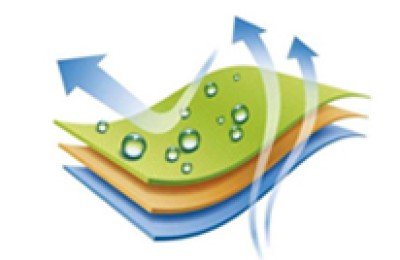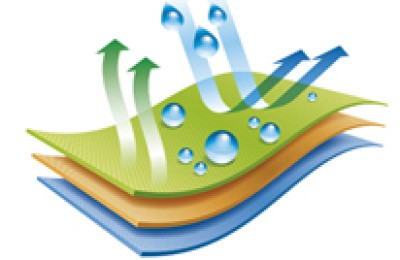

PTFE reusable mask filter membrane is a flexible and elastic material with high porosity, very uniform pore size distribution, good air permeability, and can be used repeatedly.
Currently, the filter layer used for masks is mainly polypropylene (PP) melt-blown non-woven fabrics. In order to effectively filter particulate matter, PP melt-blown non-woven fabrics generally undergo electret treatment. Adding charges to the filter can intercept fine particles through electrostatic adsorption, which can greatly improve the filtration efficiency.
Therefore, the filtration mechanism of PP melt-blown non-woven fabric is physical interception plus electrostatic adsorption.
The surface of the ptfe reusable mask filter membrane is composed of 100~200 nanofibers staggered into holes. After the fiber diameter is reduced to the nanometer level, the surface area increases, the pore size becomes smaller, and the pore volume increases, which can effectively block PM2.5 .
It also has a fibrillar microporous structure with a porosity of more than 88%, 1.4 billion micropores per square centimeter, and a pore size range of 0.1μm-0.5μm. This film is laminated on various fabrics and substrates using a special process. material, it can become a new type of filter material.
It is an environmentally friendly material manufacturer specializing in R&D, production and sales of ptfe reusable mask filters.
Our company is different from other manufacturers.
Our company can customize according to user’s requirements.
The optimized combination of key technical parameters such as speed ratio, pressure ratio, operating temperature, etc. can realize online control of air permeability, thickness and void ratio according to the ratio and pore-forming medium to meet the different requirements you need. .
Interested parties can enter the store for consultation.
</p