
The fabrics with the largest shrinkage ratio are viscose fiber, rayon, and artificial wool fabrics. The fabrics with the largest shrinkage ratio are synthetic fibers and their blended fabrics, followed by wool fabrics, linen fabrics, and cotton fabrics in the middle.
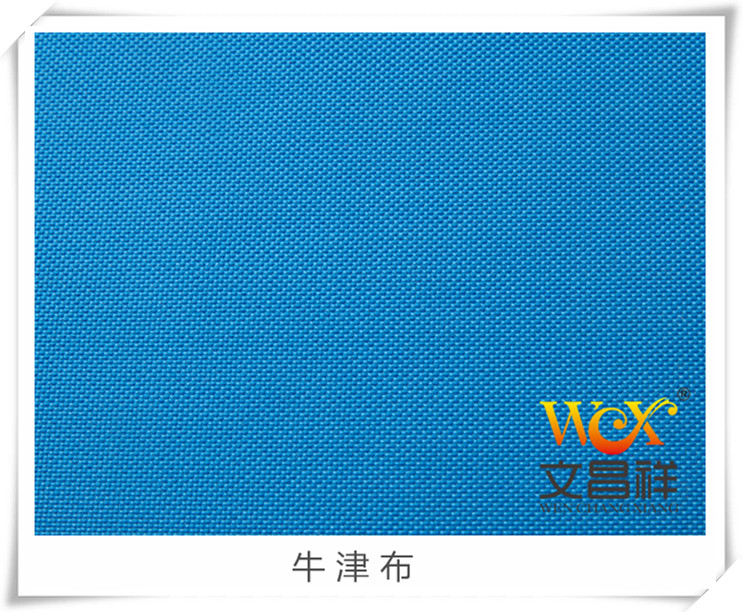
So it affects Oxford cloth Factors that cause shrinkage:
The shrinkage rate of Oxford cloth refers to the percentage of Oxford cloth shrinkage after washing or soaking in water.
① Different raw materials of Oxford cloth have different shrinkage rates. Generally speaking, fibers with high hygroscopicity will expand when soaked in water, increase in diameter, shorten in length, and have a large shrinkage rate. For example, the water absorption rate of some viscose fibers is as high as 13%, while the synthetic fiber Oxford cloth has poor hygroscopicity, so its shrinkage rate is small.
② Oxford cloth has different production processes and different shrinkage rates. Generally speaking, during the weaving, dyeing and finishing process of Oxford cloth, the fibers have to be stretched many times, and the processing time is long. The shrinkage of Oxford cloth with larger tension will be larger, and vice versa.
③ Oxford cloth yarn has different thicknesses and shrinkage rates. Cloth with a thicker yarn count will have a greater shrinkage rate, while Oxford cloth with a finer yarn count will have a smaller shrinkage rate.
④ Oxford cloth has different densities and different shrinkage rates. If the longitudinal and latitudinal densities are similar, the longitudinal and latitudinal shrinkage rates are also similar. Fabrics with a higher warp density will shrink more in the warp direction; conversely, fabrics with a higher weft density than warp density will shrink more in the weft direction.
Since the establishment of the brand, we have always maintained this: making good cloth with heart – textile http://www.wcxfz.com
</p