
The Zheng Cotton Index rose by 19% in May, making it a dazzling star of commodities. However, on the morning of the 5th, the main contract of Zheng Cotton futures suddenly fell to the limit, and the cotton yarn futures contract also plummeted, and finally ended at the limit. Cotton staged such a reversal of plot, which made many market speculators say they can’t afford to be hurt. This also casts a shadow on the viscose staple fiber that has been strongly boosted by Brother Cotton in the early stage. Will its price in the future be “all prosperous and all lose” or will it still “fear no severe cold and continue to be strong”?
Let’s first review the cotton incident that “stepped down from the altar”:
On May 16, Zheng Cotton’s main 1901 contract The daily limit began, and by the end of the month it had experienced a total of 4 daily limit increases. The first price limit was 17,050 yuan/ton, and the highest price was 19,250 yuan/ton. On June 5, affected by several news sources, the price of Zheng cotton fell directly to the limit, which was 17,980 yuan/ton. Prices are on a rollercoaster ride. In fact, the factors for the previous price limits are very clear: good fundamentals, technical support, and capital entry. As for the sudden limit drop, it was mainly stimulated by the news. On June 2, the National Cotton Trading Market and China Cotton Reserve Company issued an announcement that starting from June 4, reserve cotton rotation transactions are limited to cotton textile companies, and are limited to the company’s own use and may not be resold; June 4 The China Cotton Association stated that it will issue additional imported cotton quotas to further meet market needs. In the near future, a certain amount of cotton import sliding tax quotas will be specially issued to cotton textile enterprises. In addition, there is no upper limit on the total amount of cotton reserves for rotation this year. As long as cotton textile enterprises have demand, the rotation time can be extended to the end of September. At the same time, the statement also said that China’s domestic cotton gap is not as big as imagined, and there is the possibility that import cotton quotas will continue to be liberalized. This series of news caught the market off guard. Zheng Mian began to fall back from high levels, funds were withdrawn significantly, and policies cooled the market.
The sudden “blizzard” in the cotton market is bound to have a negative impact on viscose The impact on the short fiber market has also disrupted the pace of rising viscose staple fiber prices. However, judging from its current fundamentals, the strong appearance of viscose staple fiber is not easy to shake in the short term.
1. Supply: Industry load remains relatively low
From the supply side, in May Jiangxi Sateri, Gaomi Yinying, Hengtian Hailong and other companies have stopped operations one after another, and the Fujian factories will also undergo routine maintenance in the future. The industry supply has declined. The current industry load is 78%, compared with the high start-up of 93% in the same period last year. Generally speaking, the overall load is low.
2. Inventory: Industry inventories have fallen again
As the price of viscose staple fiber rises, the purchasing atmosphere of downstream buyers has also been driven. The mainstream in late May The production and sales of large manufacturers have continuously exceeded 100, with some single-day production and sales reaching 200%. Mid-range manufacturers also generally exceeded 100. After this round of concentrated digestion, high-end manufacturers exceeded the quota until mid-to-late June, and the market performed well. Driven by the continued improvement in trading atmosphere, industry inventories have plummeted, from a high of 15 days in the previous period to 6 days. Many high-end manufacturers said they have almost no inventory, and the overall market supply is tight.
3. Demand: annual compounding in the next three years The demand growth rate is not less than 5%
In recent years, viscose fiber has become a popular choice in mid- to high-end industries due to its advantages in comfort, dyeability, moisture absorption and other properties. The proportion of fabrics in fabrics continues to increase, and its demand is growing steadily. According to relevant statistics, my country’s apparent consumption of viscose staple fiber increased from 1.49 million tons in 2011 to 3.49 million tons in 2017, and the compound growth rate was significantly higher than that of cloth and yarn. The proportion of viscose staple fiber in mid-to-high-end fabrics continues to increase, and its application in the textile field is becoming more and more widespread. In the next few years, the demand for viscose staple fiber will still remain higher than the growth rate of spinning. The annual compound demand in the next three years The growth rate shall not be less than 5%.
4. Cost: General strike in Brazil, price increase expected for dissolving pulp stock
Viscose short Fiber has experienced an effective increase in May and has just achieved a turnaround, so manufacturers have a strong intention to increase prices. In recent times, dissolving pulp, one of its main raw materials, may be expected to rise due to the general strike in Brazil. It is understood that Brazilian truck drivers have blocked the country’s highways for a week in protest against rising oil prices. The truck drivers’ strike has shut down the economy. In Brazil, all local pulp production lines with over one million tons have been shut down one after another. It is said that the production of a mainstream dissolving pulp manufacturer has also been greatly affected by this. The driver’s strike has greatly affected the transportation of goods and the supply of raw materials to pulp mills. Some pulp mills said that the factory’s raw material stocking is in jeopardy and may also face difficulties in the future.Stop the car. The tight supply of raw materials will inevitably help increase its prices, and the cost pressure on viscose staple fiber manufacturers will once again amplify.
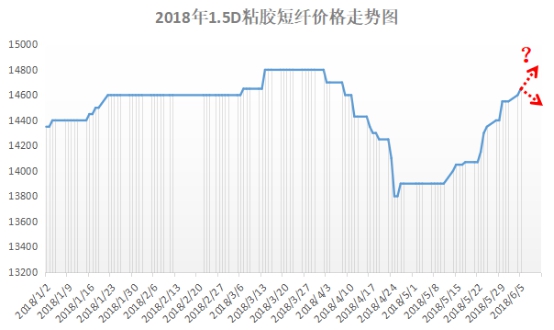
In general, there is a substitution relationship between viscose and cotton. The rise in cotton prices has driven up the viscose boom, but now viscose staple fiber is favored in its fundamentals. At this time, it has been able to escape the control of cotton and is not affected by its negative effects. The price drop may not be significant in the short term.
</p