
1. Classification of textile fibers
Textile fibers are divided into natural fibers and chemical fibers
Natural fibers mainly include cotton, wool (wool, rabbit hair, mohair, etc.), silk, and hemp (ramie, flax, hemp, etc.)
Chemical fibers are divided into regenerated fibers and synthetic fibers
Regenerated fibers include viscose, bamboo fiber, and Tencel , modal, Yassel, cupro, etc.
Synthetic fibers are divided into polyester, acrylic, nylon, spandex, vinylon, polypropylene, etc.
Chemical fibers are divided into filaments and short fibers
Filaments include the following types: POY, FDY, DTY, ATY
POY: pre-oriented yarn, spun at a high spinning speed. The crimped yarn has a certain degree of orientation. POY is an intermediate product and is a stretch-modified yarn. The raw materials generally cannot be used directly.
FDY: fully drawn yarn, which introduces stretching during the spinning process to obtain winding yarn with high orientation and medium crystallinity, which can be directly For weaving use.
DTY: Stretch modified yarn, also known as polyester low elastic yarn or elastic yarn, is made by using POY as raw yarn and stretching and twisting deformation. It often has a certain degree of elasticity and shrinkage.
ATY: air-denatured yarn, which uses air jet technology to intersect the filament bundles to form irregular twisted filament circles, making the filament bundles A fluffy terry yarn.
Applications and differences between DTY and FDY: DTY fibers are curly and FDY fibers are straight. DTY low elasticity yarn and modified yarn are mostly used for knitting, while FDY is mostly used for woven fabrics. DTY and FDY are used in knitted fabrics. The difference is that the fabric using DTY is more fluffy, while FDY is tight and thick.
Filament specifications: The specifications of filament generally include four elements: single fineness, number of single filament holes, cross-sectional shape (round, special-shaped), Gloss (large gloss, semi-matt, full matt). For example, 75D/72F means the total fineness of 75D and the number of spinneret holes is 72.
Chemical short fiber can be divided into fine denier fiber, cotton type, wool type, medium and long type, fiber with fine denier fiber below 1.2D; cotton type 1.5-2.0D×35-40mm; medium-long type 2.0-3.0×51-76mm; hair type: 2.5-4.0×35-40mm.
2. Introduction to the properties of main chemical fibers
1. Polyester: also known as polyester fiber , is currently the most widely used synthetic fiber variety. Polyester is divided into fine-denier polyester, conventional cotton-type polyester, wool-type polyester, medium-length polyester, polyester filament, functional polyester, etc.
Polyester fiber has the following characteristics: polyester fiber has high strength, fiber strength is 2 times that of cotton, polyester fiber has good elasticity, polyester elasticity is close to wool, polyester fiber It has poor water absorption, and the moisture regain of polyester is only 0.4%.
Polyester fiber fabric has the following characteristics: the fabric has high strength, high tearing strength and bursting strength, the fabric does not wrinkle, and has an iron-free effect. Pure polyester fabric has poor air permeability and is prone to static electricity. The dyeing performance of polyester is poor, so the dyeing process of polyester is different from that of pure cotton and viscose. Generally, polyester is mainly blended or interwoven with other fibers.
2. Acrylic fiber: scientific name is polyacrylonitrile fiber, also known as wool fiber. Acrylic fiber is also divided into cotton type acrylic fiber and wool type acrylic fiber. Acrylic fiber also includes expanded acrylic fiber and anti-pilling acrylic fiber.
Acrylic fiber has the following characteristics: good fiber elasticity, fluffy fiber, heat resistance, light resistance, and poor hygroscopicity.
Acrylic fabric features: fluffy fabric, good warmth retention, easy to generate static electricity, poor resistance to pilling when made into sweaters, usually blended with cotton or wool. Blended with cotton, it can be made into thermal underwear and socks, and blended with wool, it can be made into sweaters, knitted wool jackets, blankets, wool suits, etc.
3. Nylon: scientific name is polyamide fiber, also known as nylon. Can be made into filaments and short fibers.
Characteristics of nylon fiber: Its outstanding features are very good wear resistance, fatigue resistance ranking first among fibers, better hygroscopicity than polyester, and good resilience.
Characteristics and applications of nylon fabric: Nylon fabric has good wear resistance, but its wrinkle resistance is not as good as polyester, which limits the use of nylon. Blending and interweaving nylon with cotton and cellulose fibers can make up for the shortcomings of nylon. Generally, nylon is used in socks, underwear, and sportswear. Seamless underwear mainly uses nylon, spandex, cotton or cellulose fibers to combine comfort, consideration and fashion. Shaping underwear generally uses high-elastic nylon.
4. Spandex: The scientific name is polyamide methyl acetate, which is an elastic fiber and a filament fiber. Lycra is the most famous spandex of DuPont Company. brand.
Spandex fiber characteristics: It is highly elastic and can be stretched 6-7 times, but it can quickly return to its original state when the tension disappears, and its strength is higher than latex silk 2-3 times, finer.
Spandex fabric features:Spandex is generally not used alone, but is mixed into fabrics in small amounts to make elastic fabrics or core-spun yarns. This yarn is outstanding on the cloth due to the performance of the outer fiber and has 10%-20% elasticity. Spandex and other yarns or filaments can also be made into wrapped yarn or covered yarn.
5. Other elastic fibers
PTT fiber, commonly known as elastic polyester, DuPont developed Sorona (Chinese name: Solona) is PTT fiber. PTT has the characteristics of polyester, acrylic fiber, and nylon. In addition to good anti-fouling properties, it is easy to dye, feels soft, elastic, and has as good elongation as spandex fiber. It is easier to process than spandex fiber and is very suitable for textile clothing fabrics.
PTT fabric features: The fabric is soft and has excellent drape, suitable elasticity, and excellent elongation recovery (it can still return to its original shape after being stretched by 20%) length), excellent dyeing performance and printing performance, superior dyeing fastness.
T400 composite fiber is a new type of elastic composite fiber. Currently, in addition to T400 produced by Invista in the United States, domestic Zhejiang Gudao Chemical Fiber, Xiaoxing Chemical Fiber, and Wujiang Xinmindu There are composite fibers. Mainly used in denim, knitting, etc.
6. Functional fibers and modified fibers
Although chemical fibers have solved the problem of natural fiber production Insufficient, it provides humans with a variety of fiber types to meet various human needs. However, due to its many shortcomings compared with natural fibers, it cannot fully meet higher-level human needs. Therefore, in recent years, through the use of chemical The fiber is physically or chemically modified (cross-sectional shape, adding additives, chemical grafting, etc.) so that it can maintain the advantages of chemical fibers and achieve the functions of some natural fibers. Focus on several functional fibers:
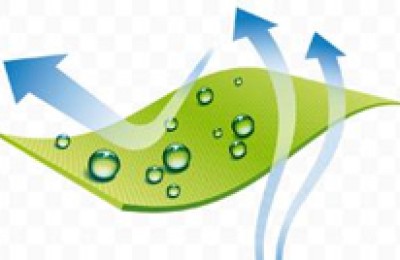
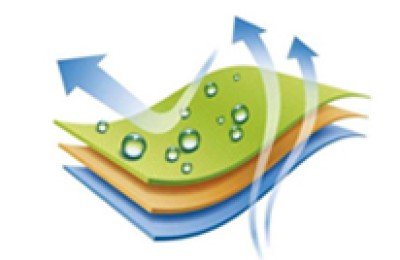
Moisture-absorbing and sweat-wicking fiber: Make the fiber cross-section into a shape such as fine grooves or hollows, and use the capillary action produced by it to The sweat is absorbed and transported quickly to the surface of the fabric and dispersed, thereby achieving the effect of moisture conduction and quick drying. The main manufacturers are DuPont COOLMAX, Taiwan Far East TOPCOOL, Taiwan ZTE COOLPIUS, and Quanzhou Haitian COOLDRY. They are mainly used for sportswear, socks, casual wear, etc.
Antibacterial fiber: The ultrafine powder of antibacterial agent is added to the chemical spinning liquid in a certain proportion for spinning. Since the antibacterial agent enters the interior of the fiber, The antibacterial fiber obtained by this method is washable and has a long-lasting antibacterial effect. Through the principle of concentration gradient, the antibacterial agent continuously flows to the surface of the fiber. The main antibacterial fibers include nano-silver ion fiber, zinc oxide fiber, copper fiber, chitin fiber, etc. Antibacterial fiber is mainly used in home textiles, socks, underwear, medical, etc.
Thermal fiber: Hollow thermal fiber refers to the fiber with thin tubes in the axial direction of the fiber. The fiber cavity is filled with still air, which can give the fabric a breathable feel. It has lightweight elasticity, good moisture permeability and comfortable thermal insulation effect. It is widely used in thermal underwear, bedding, sportswear, etc.
Far-infrared fiber: It is a certain compound metal oxide that has a 5-25µm full-wavelength far-infrared emissivity of more than 85% at 50 degrees Celsius. Micropowders (alumina, zirconia, magnesium oxide) are evenly added to the fibers spun into the spinning solution. The far-infrared rays released by the far-infrared fibers can resonate with water molecules and organic matter to produce a good thermal effect. Therefore, far-infrared textiles have Good warmth retention. Far infrared fibers are generally used in underwear.
3. Development Trend of Chemical Fibers
According to statistics, in 2015 the global fiber processing total The total volume of textile fiber processing was 96.677 million tons, of which 6.815 million tons were chemical fibers, accounting for 69.1%. my country’s total textile fiber processing accounted for 54.8% of the global total, occupying a dominant position. In 2015, my country’s polyester output was 39 million tons, accounting for 81.1%, with viscose and nylon occupying second and third place. my country’s conventional fiber technology has reached the international advanced level, fiber diversification and multi-functionality are developing rapidly, the differentiated and functional varieties of conventional fibers are more abundant, and high-performance fibers have made major breakthroughs.
In the future, the development trend of chemical fibers will be more functional and fashionable, fiber fineness will continue to break through, and environmental protection and energy saving will be paid more attention to.
4. Processing of chemical fibers
Polyester usually refers to PET, which is composed of p-toluene Polyethylene terephthalate is a polymer obtained by the condensation of dicarboxylic acid (PTA) and ethylene glycol (MEG). The downstream products of polyester are mainly polyester filaments, staple fibers, and chips (including fiber chips and bottles). slices, film slices).